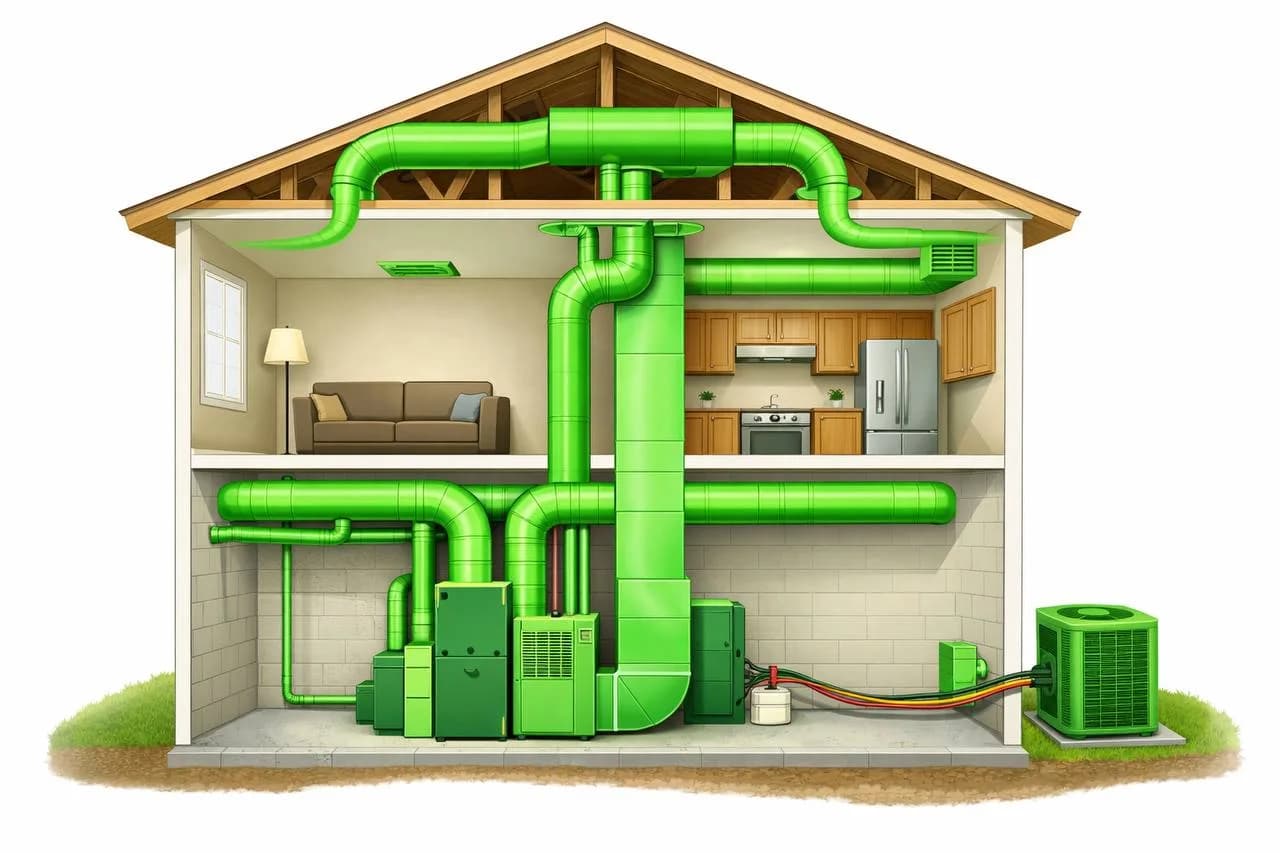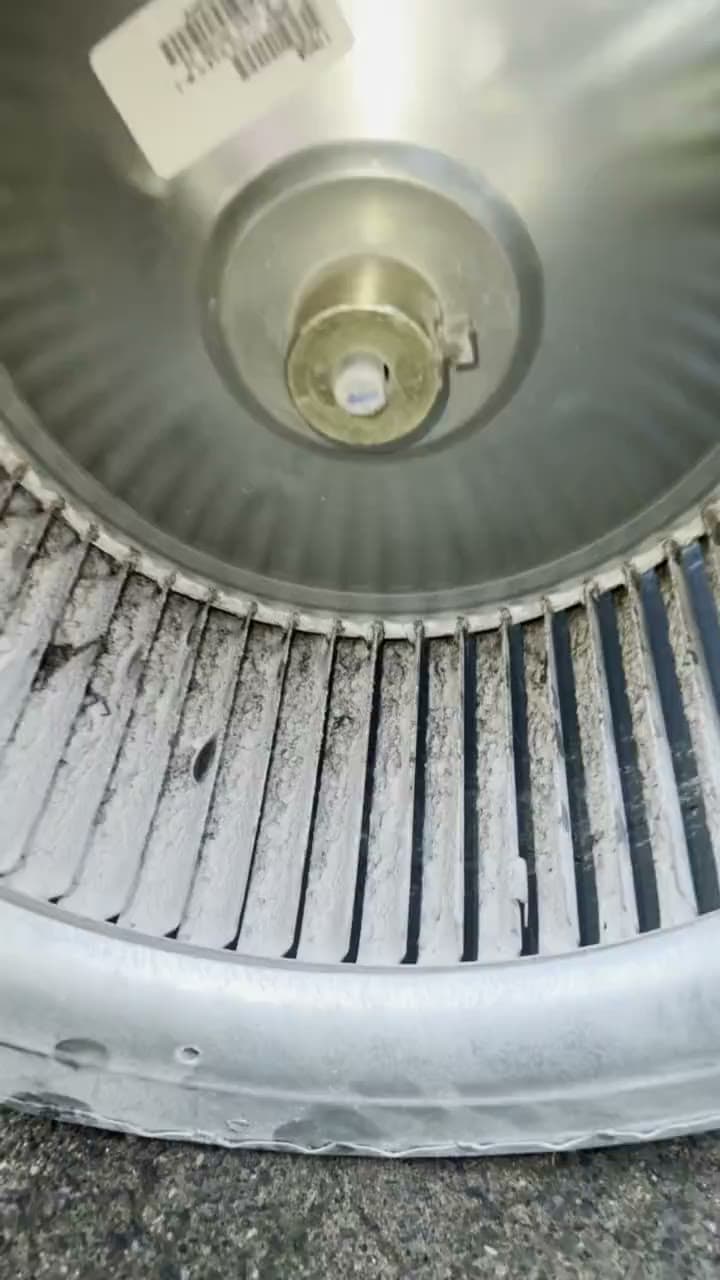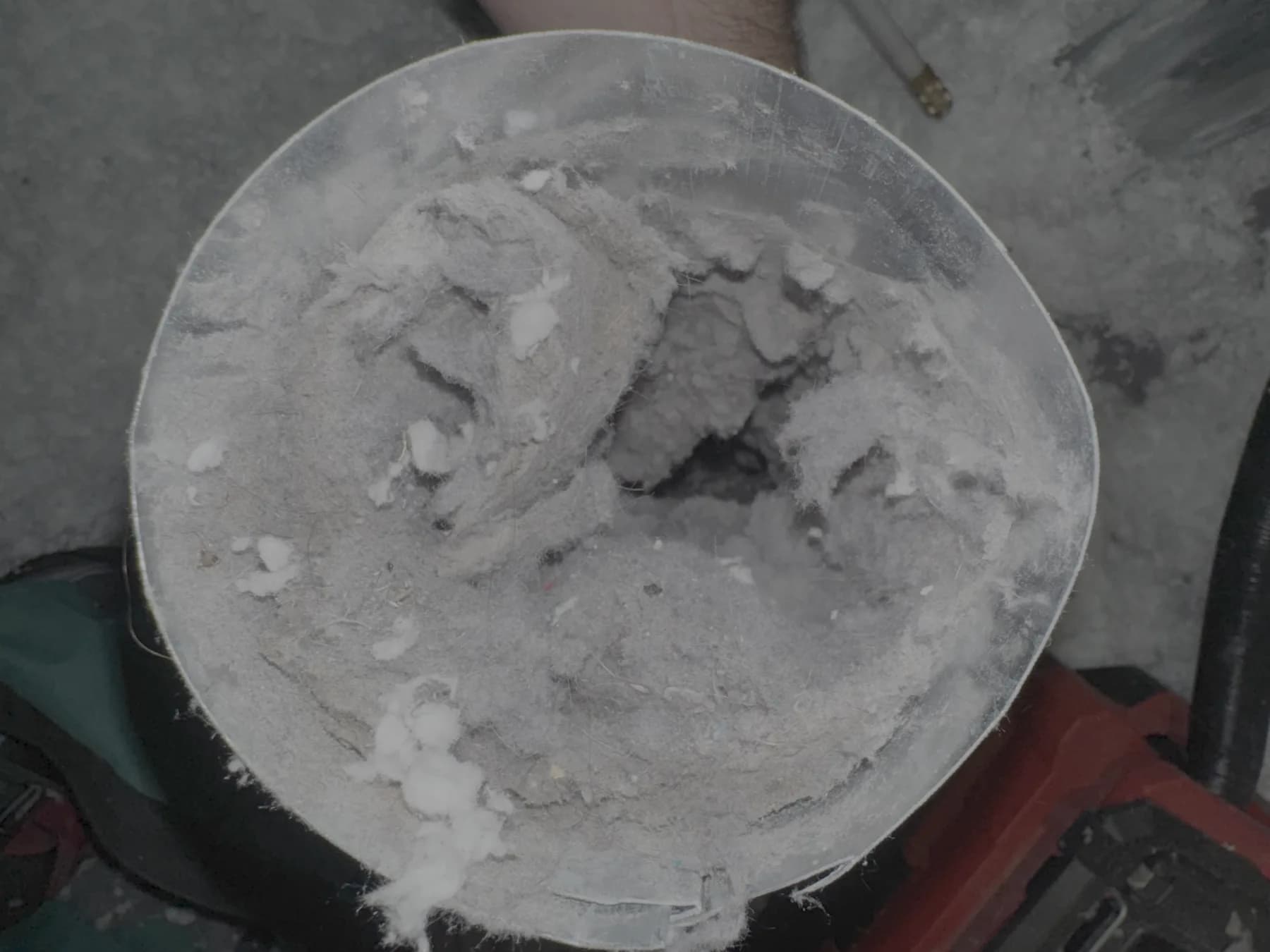
Short answer: If your laundry room is on the second floor, your dryer vent likely runs up through the attic and exits through a roof cap. Those vertical runs collect heavy, damp lint faster than short sidewall vents—especially during cool, rainy Pacific Northwest winters—and clearing them safely takes more than cleaning the lint screen behind the dryer.
NW Breeze is a family-owned company with 20+ years of full-system cleaning experience. We are licensed, bonded, and insured, and we serve homeowners across the Portland metro and Vancouver, WA.
Why roof dryer vents clog faster in Oregon and Washington
Every load of laundry pushes warm, humid air and fine lint out of the dryer. On a short, straight exterior wall run, airflow usually stays fast enough to carry that moisture outside before it cools. A roof-vented dryer works harder:
- Gravity works against the lint. Pushing damp lint straight up through a wall and attic takes more airflow than blowing it horizontally a few feet.
- Cold attic air causes condensation. From late fall through spring in the Portland metro and Vancouver, WA, unheated attics sit near outdoor temperatures. When hot, wet dryer exhaust hits a cold vertical duct wall, moisture condenses inside the pipe and turns dry lint into a heavy, sticky paste that clings to the walls and elbows.
- The roof cap is out of sight. Unlike a ground-level hood you can glance at while walking past the house, a roof termination sits two stories up. A damper flap weighed down by wet lint—or a mesh screen that should not be on a dryer vent—can stay partly shut for months without anyone noticing.
Warning signs your roof dryer vent is restricted
You do not need to climb onto the roof to spot a developing blockage. Watch for these signs inside the laundry room:
- Towels, jeans, or heavier loads need more than one cycle to dry.
- The laundry room feels noticeably warmer or more humid while the dryer runs.
- The top or sides of the dryer feel unusually hot to the touch.
- A musty or overheated smell appears during a cycle, or the dryer displays a vent or airflow warning code.
- Water drips near the back of the dryer, or you notice faint moisture spots on the ceiling where the vent passes through the attic.
- Lint gathers around the floor behind the dryer even though you clean the lint screen every load.
What you can check safely—and what to leave to a pro
There are a few simple checks any homeowner can do from inside the house:
- Clean the lint trap before or after every load, and wash it gently with warm water every few months if fabric softener leaves a film.
- Pull the dryer out gently to make sure the transition hose behind it is not crushed, kinked, or torn.
- Keep track of drying times once cold weather settles in.
What is worth avoiding: climbing onto a wet, steep, or mossy winter roof to pry open a vent cap, or forcing a lightweight DIY brush rod all the way up a tall attic run. On vertical ducts with elbows, twisting or pushing a flexible kit from below can pop a duct joint apart in the attic—leaving warm, moist exhaust and lint venting right into your insulation—or leave a detached brush head wedged inside the line.
What a professional roof dryer vent cleaning covers
A thorough dryer vent cleaning service addresses the full path from the back of the dryer to the exterior termination, not just the first few feet behind the machine. On a roof-vented home, a proper visit typically includes:
- Inspecting the transition connector behind the dryer and checking airflow before and after cleaning.
- Clearing the full vertical and attic duct run with professional agitation and extraction equipment so lint is removed rather than packed tighter against the roof cap.
- Checking the roof termination when it can be accessed safely, making sure the damper opens freely and no improper bird screen is trapping lint.
- Flagging any separated joints, crushed transition hoses, or unsuitable duct materials so you know if a repair is needed.
How often should a roof dryer vent be cleaned?
For most households, once a year is a sensible baseline—and sooner if you have a large family, pets, heavy laundry volume, or a long vertical run through an unheated attic. If you want to compare typical warning signs and maintenance timing, see our guide on dryer vent cleaning frequency and warning signs.
Need a roof dryer vent checked in Portland or Vancouver, WA?
If your upstairs dryer is taking longer to finish a load or heating up the laundry room, a full-line cleaning restores airflow and helps keep your dryer running safely through the wet season. Call NW Breeze at (503) 935-7881 or request a quote on our dryer vent cleaning page.