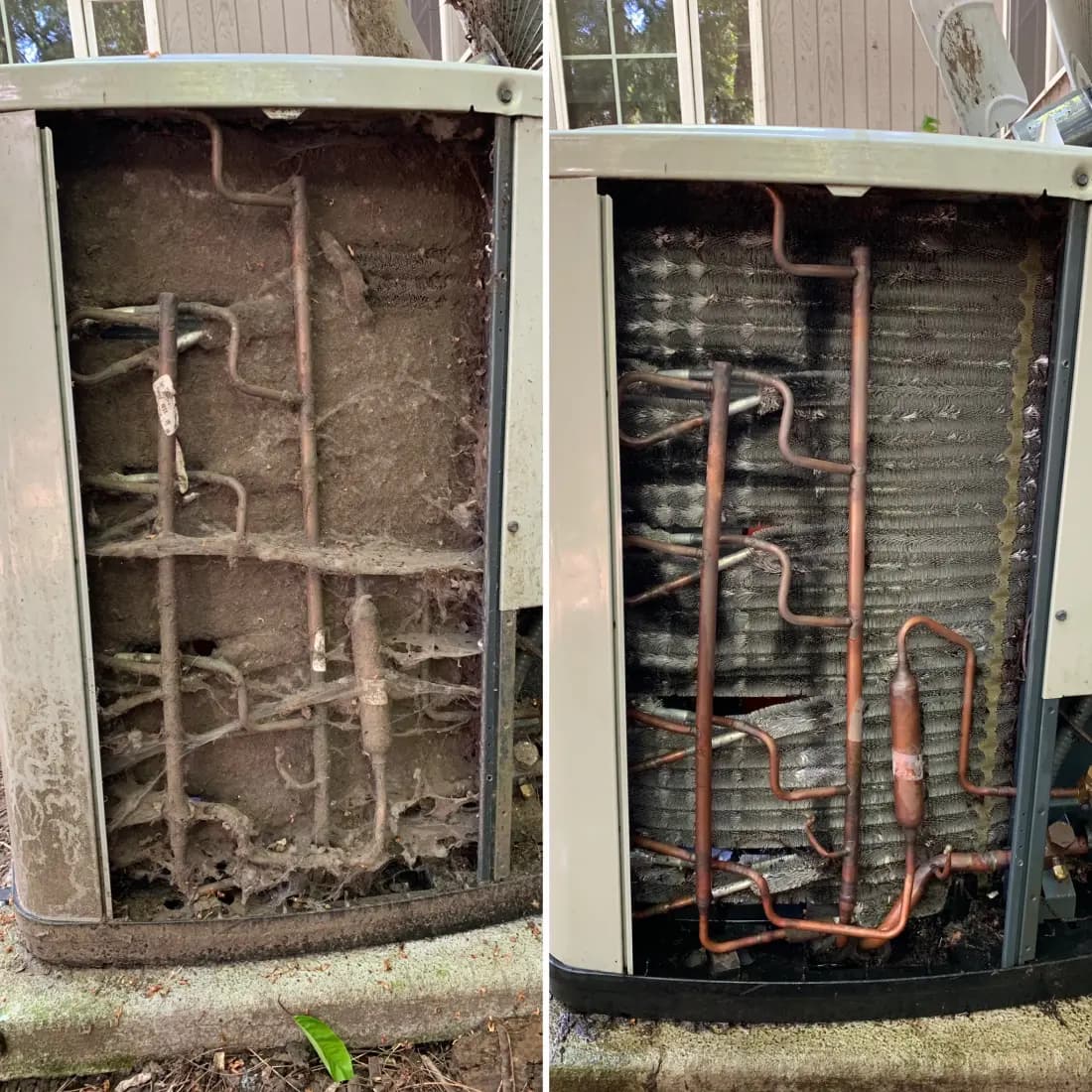
Short answer: After a Portland or Vancouver summer, the outdoor air conditioner coil is often packed with cottonwood, pollen, grass, and the wet leaves that show up once the rain starts. That mat makes the unit run longer to move the same heat. Look at the fins now, while the debris is easy to see, and plan a professional coil cleaning about once a year. The best slot is before the next cooling season. Sooner if the fins already look felted over.
What people are dealing with right now
Cooling season in the Portland metro and Vancouver WA is over. Homeowners are looking at the box outside the house and finding what summer left in it. Cottonwood fluff from late spring dries into the fins. Pollen and dust stick next. If the unit sits near a lawn, grass clippings join them. Then the fall rains arrive and leaves lie on the top and against the sides. Wet debris does not rinse itself out. It mats down and sits there until someone clears it.
A fall checklist in the Pacific Northwest usually says the same thing about outdoor equipment: get the leaves off before the wet months, and do not wait until the system is working hard again. For a cooling coil, that hard stretch is next summer. Clearing it in the fall means you are not calling during the first hot week, when the fins are already caked and schedules are full.
Some outdoor units also heat the house. Those are heat pumps. If yours does, packed fins matter in cold weather too, not only in July. A cooling-only condenser can sit until spring and still turn on. The debris will not be cleaner after a wet winter.
Why a dirty outdoor coil struggles
The outdoor coil dumps heat from the house to the air outside. Air has to pass through the fins to do that. When cottonwood, dirt, or leaves block those openings, the compressor runs longer to reject the same heat. The house still cools, just more slowly, and the equipment spends more hours under load. That is the whole reason a coil cleaning exists. It is not a duct cleaning, and it does not change the filter inside.
Bent fins block air the same way dirt does. A pressure washer aimed into the coil folds them flat. Brushing or blasting from the outside can also drive debris deeper. The useful clean pushes dirt out of the fins, then straightens the ones that got bent.
Signs from last summer
- The outdoor unit ran most of the afternoon on hot days
- The house reached temperature, but it took a long time
- The fins look gray or fuzzy instead of open metal
- Leaves, needles, or seed fluff are stacked on the cabinet or against the sides
- Shrubs or stored items sit tight against the unit, so air cannot move around it
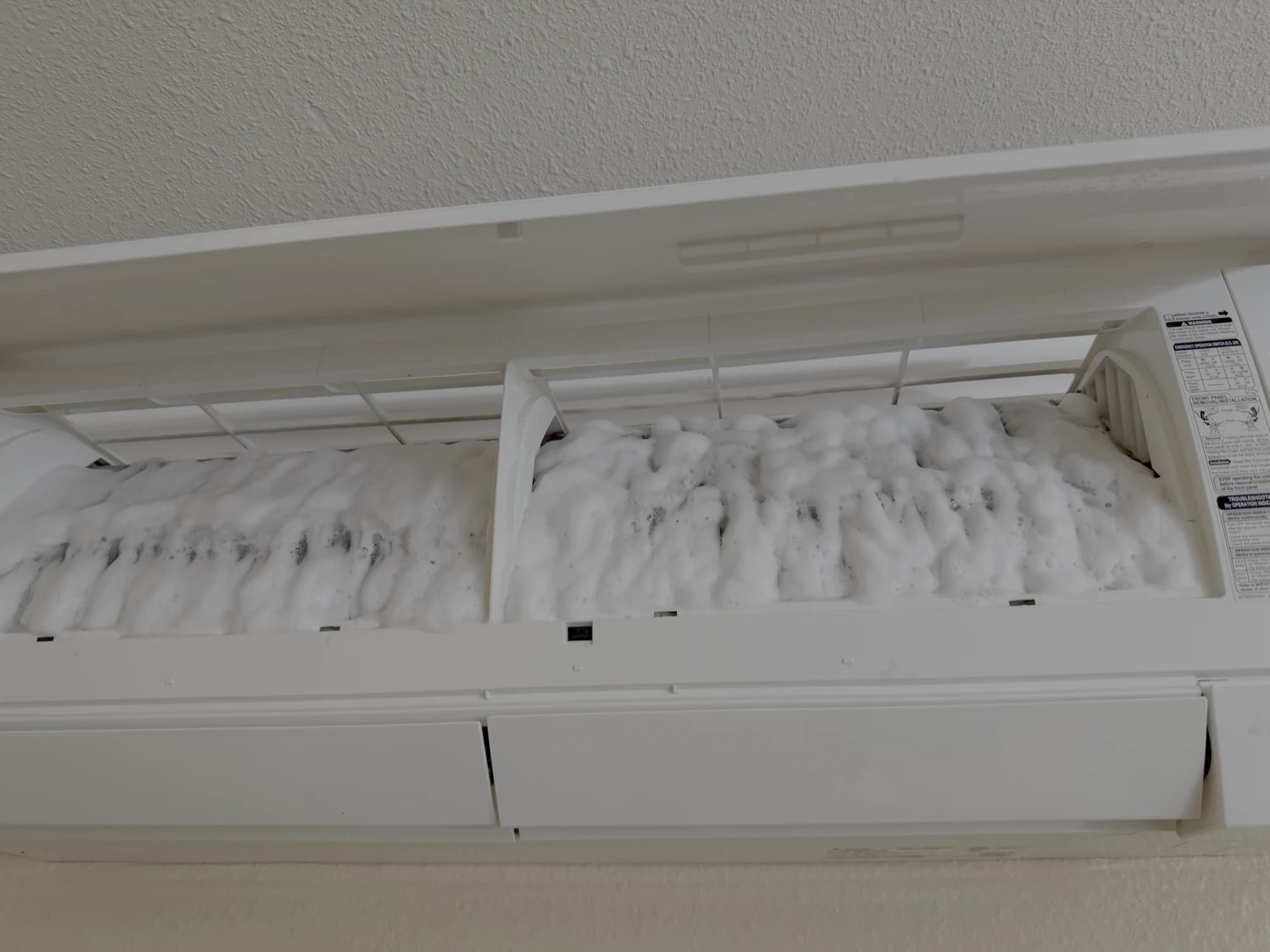
A unit that will not start, a line covered in ice, or a new rattle from inside the cabinet is not a cleaning visit. Those need a licensed HVAC technician. NW Breeze cleans the coil. We do not repair refrigerant or electrical faults. If we see that kind of problem, we point it out and refer you.
What an outdoor coil cleaning includes
Our outdoor A/C coil cleaning covers the condenser outside. A visit follows the same steps we use on Portland and Vancouver equipment:
- Fins cleared and rinsed from the inside out, so debris leaves the coil instead of getting pushed deeper
- Accessible bent fins straightened so air can pass again
- The pad and the area by the disconnect cleared of leaves, vegetation, and debris
- A straight note if something looks like a repair rather than dirt
We are a family-owned team with 20+ years cleaning home comfort systems, and we are licensed, bonded, and insured. Call (503) 935-7881 if you want the outdoor coil checked. If registers puff dust when the heat comes on, that is a separate job, air duct cleaning or furnace cleaning. A musty ductless head is a mini-split cleaning, which includes that head and its own small outdoor unit. Tell us what you are seeing and we will say which visit actually fits.
A few things you can do first
- Pull loose leaves off the top and away from the sides. Skip the pressure washer.
- Move bins, lumber, or plants that sit against the cabinet.
- Leave a clear path so we can reach all four sides.
That prep does not replace a fin cleaning. It keeps a new layer of leaves from landing on a coil we just cleared, and it lets us see the fins instead of the clutter around them.